
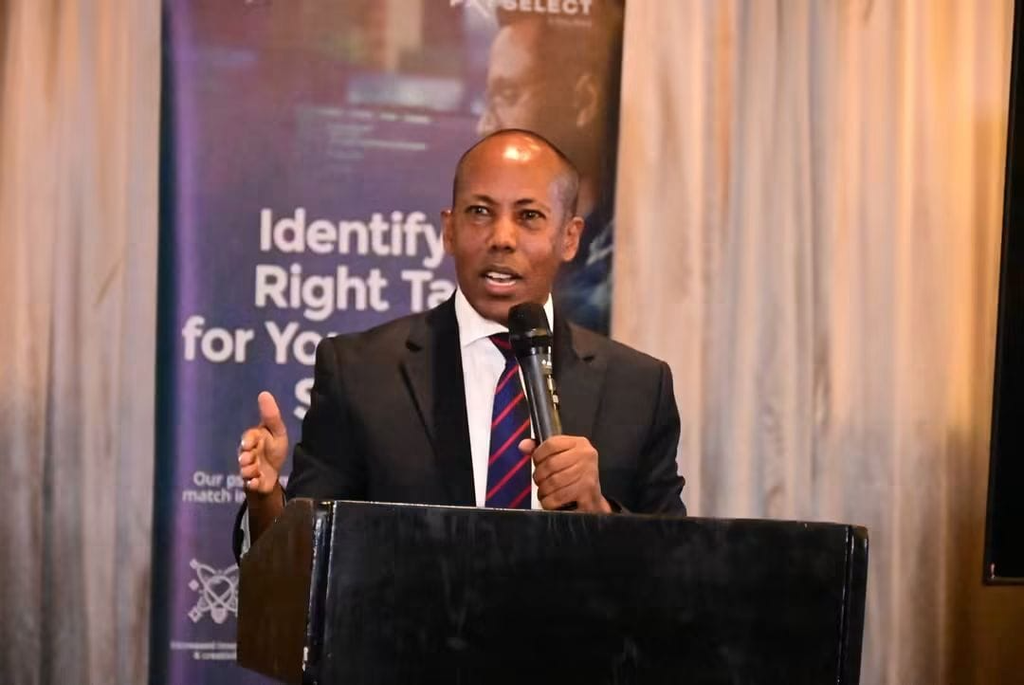
Prof Nura Mohamed Champions Professional Psychometric Assessments to Strengthen Public Service Leadership
KSG Director General says professional competence, ethical standards and evidence-based assessments are essential in recruitment, talent management and leadership development across public institutions.
Kenya School of Government (KSG) Director General Prof Nura Mohamed has called for greater investment in professional competence and ethical practices in psychometric assessments, saying institutions must strengthen the quality of decisions they make when recruiting, managing and developing their workforce.
Prof Mohamed said psychometric assessments offer valuable insights into individual capabilities, potential and behaviour, but their effectiveness depends largely on the competence of professionals responsible for selecting, administering and interpreting the assessment tools.
He made the remarks during the launch of the Psychometric Survey Report 2026 in Nairobi, where discussions focused on the use of structured assessments in human resource management and the capacity of practitioners across East Africa.
The survey findings highlighted a significant professional capacity concern, indicating that although many practitioners recognise the importance of psychometric assessments, a majority lack formal certification to administer or interpret the tools.
Prof Mohamed observed that this gap calls for deliberate investment in professional training, certification and responsible assessment practices to ensure that institutions obtain reliable information when making decisions about their human resources.
He emphasised that psychometric assessments must be contextually relevant, evidence-based, ethically grounded and technology-conscious.
According to the KSG Director General, assessment processes should be designed to promote fairness, objectivity and equal opportunities while ensuring that the results are interpreted by qualified professionals.
He noted that poorly selected or incorrectly administered assessment tools could undermine the credibility of recruitment and talent management processes, making professional competence an important requirement for institutions seeking to improve their human resource systems.
Prof Mohamed further underscored the importance of evidence-informed approaches to talent management and leadership development, saying they are essential in building a capable, adaptable and high-performing public service.
KSG strengthens assessment capacity
The Director General said the Kenya School of Government is advancing professional assessment practices through its virtual assessment centre, which supports psychometric assessments for recruitment and leadership development.
The initiative provides an avenue for institutions to incorporate structured assessment approaches into their human resource processes and strengthen the identification and development of talent.
He explained that the institution is also working towards establishing the Centre for Strategic Foresight and Public Service of the Future, which will further strengthen its capacity to anticipate emerging competency requirements.
The proposed centre is expected to support forward-looking approaches to workforce planning, enabling public institutions to identify the skills and capabilities they will require as the operating environment evolves.
Prof Mohamed said preparing the public service for the future requires institutions to move beyond traditional human resource practices and embrace approaches that identify potential, develop leadership capabilities and respond to changing demands.
He encouraged chief executive officers and heads of institutions to make the quality of people-related decisions a leadership priority rather than treating recruitment and talent management as routine administrative functions.
He also challenged human resource practitioners to continually invest in their professional development so they can provide competent guidance on assessment, recruitment and workforce development.
Fairness and objectivity in public service
Prof Mohamed maintained that every individual deserves a fair opportunity to demonstrate their potential, while every public institution has a responsibility to ensure that decisions affecting its workforce are informed, objective and purposeful.
He said the responsible use of psychometric assessments could help institutions make better-informed decisions while strengthening the alignment between individual capabilities and organisational requirements.
The discussions at the Nairobi launch highlighted the need for stronger professional standards, continuous capacity building and responsible adoption of assessment technologies across East Africa.
For the Kenya School of Government, strengthening assessment capacity forms part of its wider mandate of supporting effective public administration, leadership development and institutional performance.
The institution’s focus on virtual assessment capabilities and strategic foresight reflects an approach that links the development of individual competencies with the changing needs of public institutions.
Prof Mohamed’s message to public sector leaders was that the quality of an institution’s workforce begins with the quality of decisions made about its people.
As public institutions respond to emerging challenges and technological changes, professional assessment practices will remain an important tool in identifying talent, developing leadership and preparing the public service for the future.
Tighten repeated assessment pointsLead with the certification gapClarify the report launch context
More Stories
China Focus: Int’l seminar explores CPC’s self-governance practices, global implications
ASEAN talks on strengthening regional information, media cooperation
Interview: World Media Summit to help global media navigate AI transformation, says Pakistani expert