
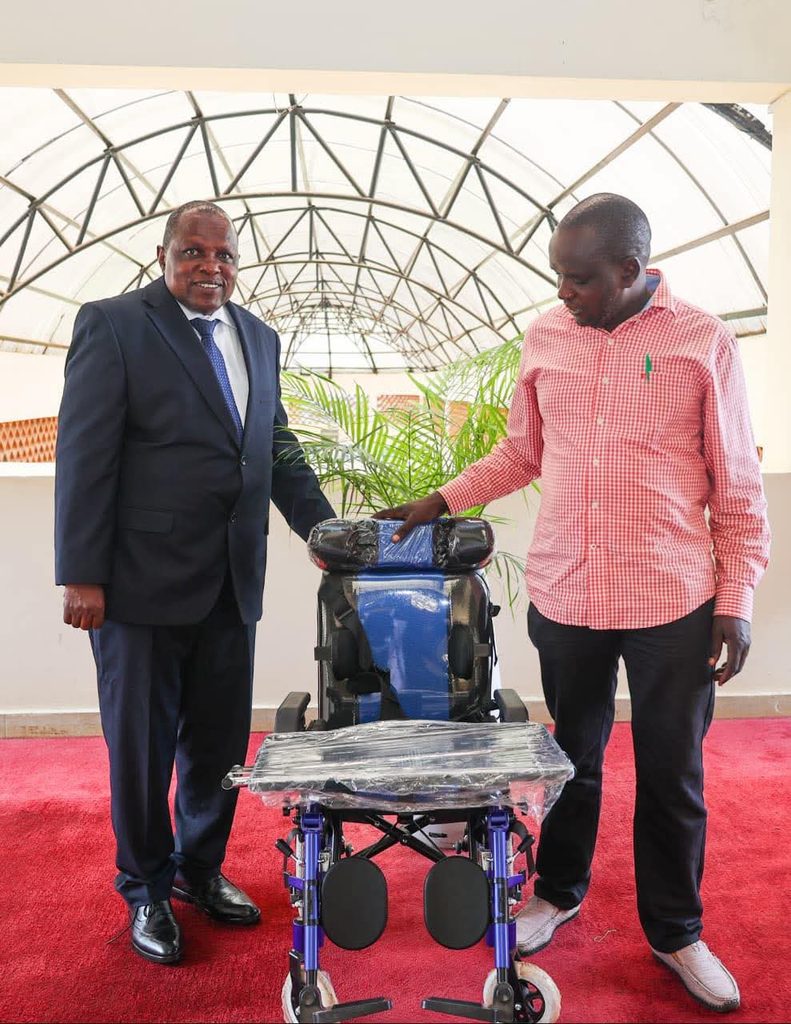
KISE DG Dr Norman Kiogora Strengthens Disability Inclusion Through Provision of Adapted Wheelchair
The Director General of the Kenya Institute of Special Education (KISE), Dr Norman Kiogora, has reaffirmed the institution’s commitment to improving the lives of persons with disabilities through practical interventions that promote mobility, independence, dignity and social inclusion.
In a heartwarming demonstration of KISE’s commitment to inclusive service delivery, Dr Kiogora facilitated the provision of an adapted wheelchair to Hon. Gilbert Kipsang Koskei, MCA for Cheptiret/Kipchamo Ward in Uasin Gishu County, on behalf of young Titus Kipruto.
The intervention followed a comprehensive functional assessment conducted during a KISE outreach programme in Chebolol, Uasin Gishu County, where Titus was identified as requiring specialised seating and mobility support because of significant mobility and postural challenges.
The initiative underscores Dr Kiogora’s practical and people-centred leadership, which places the needs of persons with disabilities at the heart of KISE’s programmes and interventions.
Under his stewardship, the institution continues to demonstrate that disability inclusion must go beyond policy pronouncements and institutional commitments to deliver tangible solutions that directly improve people’s everyday lives.
The adapted wheelchair is expected to enhance Titus’s mobility, provide appropriate postural support, improve his comfort and strengthen his ability to participate in daily activities.
For children and young people living with mobility challenges, access to appropriate assistive technology can make a significant difference in their independence, confidence, participation and overall quality of life.
Dr Kiogora has consistently emphasised the importance of linking professional assessments to practical interventions, ensuring that individuals identified during outreach programmes do not remain with recommendations on paper but receive appropriate support.
This approach reflects a responsive service delivery model in which assessment, identification of needs, intervention and follow-up are treated as interconnected responsibilities.
KISE’s outreach programmes remain an important avenue for identifying persons requiring specialised education support, assistive devices, rehabilitation-related interventions and other services that promote inclusion.
By taking services closer to communities, the institution helps bridge gaps in access to specialised support, particularly for individuals and families who may face challenges accessing such services.
The collaboration involving Hon. Koskei also highlights the importance of partnerships between national institutions and elected leaders in advancing disability inclusion at the grassroots level.
For Dr Kiogora, the ultimate measure of institutional performance is not merely the number of assessments conducted or programmes implemented, but the positive difference such interventions make in the lives of beneficiaries.
The wheelchair provision therefore represents more than the distribution of an assistive device. It is a demonstration of compassion, institutional responsibility and the belief that every person deserves an opportunity to live with dignity and participate meaningfully in society.
Through such interventions, KISE continues to reinforce its position as a key institution in advancing disability inclusion and ensuring that persons with disabilities receive appropriate support to realise their full potentia
More Stories
Rahab Mukami’s Practical Empowerment Agenda: Nyeri Woman Representative Gives Young Woman a Sewing Machine to Build Her Livelihood
CPA Evans Kakai Masinde Declares Bungoma Senatorial Ambition Ahead of 2027 Elections
Xinhua think tank report highlights high-quality Belt and Road cooperation in promoting open world economy