
NEW ASSESSMENT BY HEIFER INTERNATIONAL IDENTIFIES OPPORTUNITIES TO STRENGTHEN KENYA’S DAIRY SECTOR
Kenya’s dairy sector has made considerable progress through investments in improved breeds, farmer training, milk collection infrastructure and processing. However, access to affordable, quality feed, reliable agricultural services and well-functioning markets remains important to improving productivity and the incomes of smallholder farmers, according to a new assessment by Heifer International Kenya.
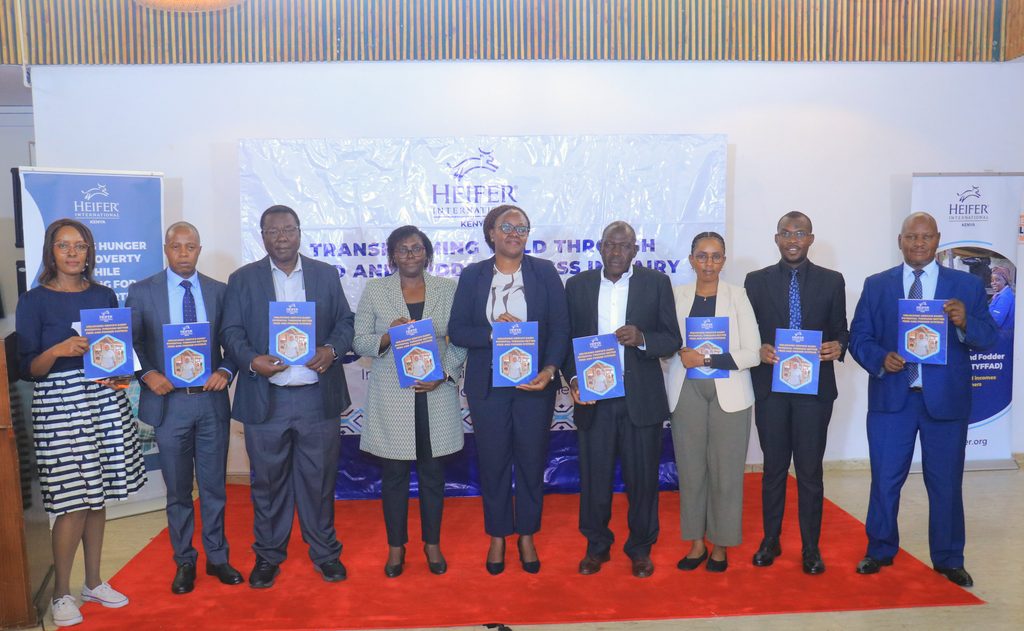
The findings, drawn from Heifer’s Dairy Value Chain Gap Analysis, were presented at a media roundtable in Nairobi on November 19, bringing together journalists, government representatives, researchers, development partners, farmers, financial institutions and private-sector actors to discuss opportunities for strengthening Kenya’s dairy industry, with particular attention to feed and fodder systems.
The assessment comes at a time when Kenya is seeking to expand agricultural productivity and strengthen food systems under the National Agri-food Systems Investment Plan (NASIP 2026–2030). The plan identifies commercial feed production, mechanized fodder production, conservation and storage as investment priorities for the livestock sector.
Kenya’s annual milk production is estimated at 5.2 to 5.76 billion liters, compared with an estimated domestic demand of 12.76 billion liters, indicating significant opportunities to increase production and improve the performance of the dairy value chain. The assessment also highlights the national feed availability gap, which the Ministry of Agriculture and Livestock Development’s investment plan estimates at 30 million tonnes annually, based on 2021 figures.
The study reviewed dairy interventions across 11 counties, with more detailed field assessments in Nyandarua, Embu and Elgeyo Marakwet. It involved 54 field engagements, including nine farmer focus group discussions and interviews with cooperatives, input suppliers, service providers, processors, financiers, government and development actors. The assessment examined the relationships among actors in the dairy value chain and identified opportunities to improve service delivery and sustainability for farmers.
Feed and fodder emerged as a recurring constraint across the assessed dairy systems. Farmers face high feed costs, seasonal shortages, inconsistent quality and limited access to mechanization and conservation services. The assessment finds that addressing these challenges requires attention not only to farm-level fodder production but also to the businesses and services that can ensure quality feed is available year-round.
The county findings illustrate how these constraints affect different production systems. In Nyandarua, smallholder farmers commonly produce between 3 and 15 liters of milk per cow daily, compared with 25–30 liters on well-managed intensive farms. In Embu, high feed costs, relatively small farm holdings and concerns about feed quality affect production costs and profitability. In Elgeyo Marakwet, seasonal feed shortages, limited veterinary and breeding services and gaps in market infrastructure present additional challenges to dairy development.
These challenges also reflect broader concerns among dairy farmers about production costs and the returns they receive from milk sales. Luke Kesei, Chairman of the Ainabkoi Dairy Cooperative Society in Uasin Gishu County, highlighted how these uncertainties affect farmers’ ability to invest in improving production. “Uncertainty in milk prices makes it difficult for farmers to plan and invest in feed and fodder production. Access to affordable financing, mechanization and extension services is equally important if we are to improve productivity and make dairy farming more profitable,” he said.
The assessment also highlights opportunities to improve milk marketing and the commercial performance of cooperatives. In Nyandarua, some farmers reported waiting between 30 and 60 days for payments through cooperative and processor channels, while informal buyers often offer immediate payment. These differences influence where farmers choose to sell their milk, highlighting opportunities for cooperatives to strengthen payment arrangements, improve market services and offer more competitive and reliable marketing options for farmers.
Commenting on the findings, Wairimu Munyinyi-Wahome, Country Director, Heifer International Kenya, said: “Feed and fodder security is not simply about responding to shortages. It is fundamental to dairy productivity, farmer incomes and the resilience of our food systems. This assessment gives us an opportunity to move beyond identifying challenges and focus on practical solutions through research, innovation, investment and stronger partnerships. We are already seeing communities take the lead in building resilience, and our responsibility is to strengthen the systems and opportunities that enable them to succeed.”
The assessment recommends a more integrated approach to dairy development, with investment in commercially viable feed and fodder enterprises, improved conservation and mechanization services, and better access to quality inputs and water. It also identifies opportunities to strengthen veterinary, breeding and advisory services; support cooperatives in expanding their business and service offerings; improve milk cooling and marketing arrangements; and develop financing suited to the needs of dairy farmers and agricultural enterprises. The recommendations align with national priorities for agricultural productivity, commercialization and climate resilience. They also highlight the importance of ensuring that women and young people have greater opportunities to own productive assets, access finance and participate in higher-value dairy enterprises.
Emphasizing the importance of coordinated action across the dairy value chain, the government called for stronger partnerships to address challenges in feed and fodder systems. “Government, development partners, processors, farmers and the media must work together to strengthen the dairy value chain. Our efforts need to go beyond feed production to include conservation, storage, distribution and market access. Stronger partnerships will be essential to addressing these challenges and improving dairy productivity,” said Paul Ndungu, Acting Director, Regulatory Services at Kenya Dairy Board, who also represented the State Department for Livestock Development.
The role of private-sector players was also highlighted as critical in improving feed quality, affordability and reliable supply, with stronger partnerships needed to bridge the gap between research and practical feeding practices. “Research has generated valuable knowledge on livestock nutrition, but we need to ensure this reaches farmers. We must strengthen extension services and equip farmers with practical skills to produce, harvest and conserve fodder at the right stage of maturity, when its nutritional value is highest. This will help livestock utilize feed more efficiently, reduce feeding costs and improve dairy productivity,” said Peris Chege, Nutritionist & Technical Advisor, Ruminant, Unga Farmcare Ea Ltd.
The findings align with Heifer Kenya’s Transforming Yield through Feed and Fodder Access in Dairy (TYFFAD) Project, which works to improve access to quality feed and fodder and support the development of more commercially sustainable fodder markets through partnerships and market-system interventions.
The assessment provides additional evidence to inform ongoing engagement among government, farmers, cooperatives, researchers, financial institutions, private enterprises and development partners. Its findings point to opportunities to build on existing investments and strengthen the services and market relationships that support a productive, inclusive and climate-resilient dairy sector.
More Stories
TISA Champions Indigenous Seed Conservation to Boost Food Security
Esther Passaris Launches CHP Welfare Organisation with KSh750,000 Seed Capital
Kenyan Homegrown Retailer Naivas Named Country’s Top Supermarket Brand