
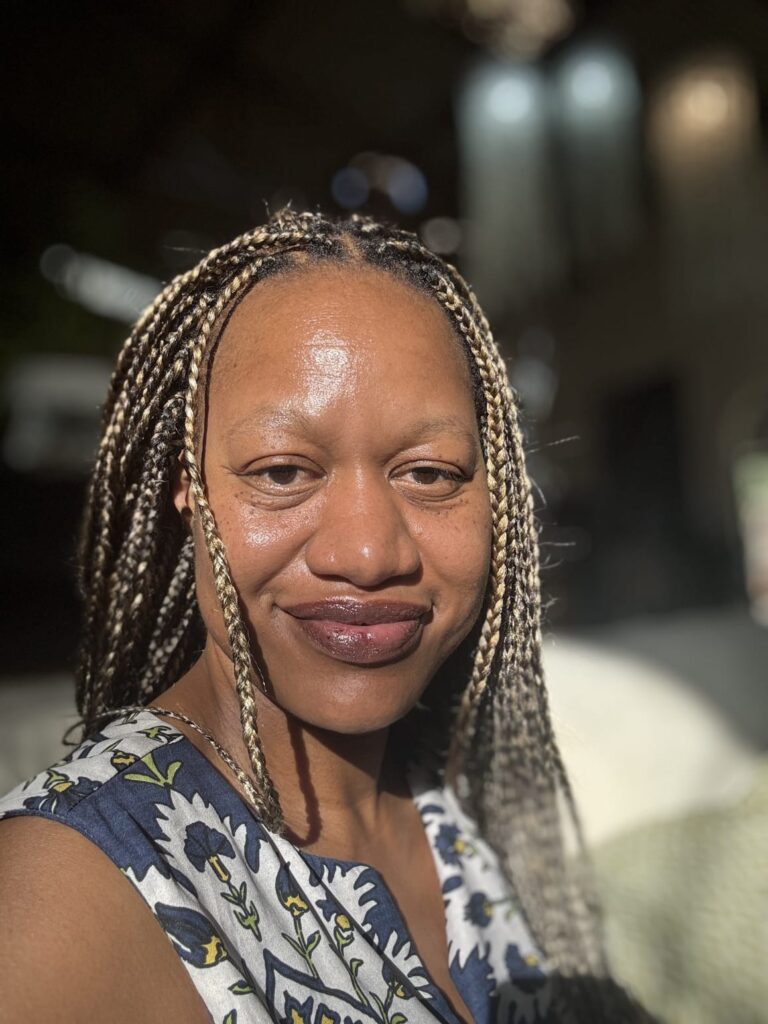
The Making of a Global Physician: Dr. Duduzile Musa’s Medical Journey
By Steve El Sabai
Raised in Zimbabwe, Dr. Duduzile Musa was exposed from an early age to the stark realities of a healthcare system constrained by limited resources and structural inefficiencies. She observed how delayed interventions, inadequate infrastructure, and systemic barriers could ultimately determine patient outcomes, even in conditions where timely care would have been lifesaving. These formative experiences did not merely influence her worldview; they crystallized into a lifelong vocation dedicated to medicine and the pursuit of equitable healthcare access.Her academic trajectory led her to the St. George’s University (SGU) School of Medicine, from which she graduated in 2002. This marked the beginning of an expansive professional journey that would traverse multiple continents, from Grenada, where she undertook her medical training, to clinical practice in both the United Kingdom and the United States. Each stage of her career contributed to a progressively nuanced understanding of medicine as both a scientific discipline and a socio-structural system shaped by economic disparity, institutional design, and human behavior.At SGU, Dr. Musa was immersed in an academically rigorous environment defined by intensity, precision, and relentless demand for adaptability. The curriculum, characterized by its integration of foundational biomedical sciences with early clinical exposure, required sustained intellectual discipline and emotional resilience. In retrospect, she regards this period as profoundly transformative, one that fortified her clinical acumen and cultivated the adaptability essential for modern medical practice.“Studying medicine at SGU challenged me in ways I hadn’t previously encountered, yet it also instilled in me the resilience to adapt, evolve, and persevere through complexity,” she reflects.Her formative training was further enriched by a culturally diverse academic milieu, which enabled her to engage with peers from varied international backgrounds. This multicultural exposure sharpened her interpersonal competencies and prepared her for the demands of globalized healthcare systems. Concurrently, early clinical engagements refined her diagnostic reasoning and strengthened her capacity for sound decision-making under pressure.As her clinical exposure deepened, Dr. Musa developed a more sophisticated understanding of healthcare delivery systems. During rotations, she encountered patients from a wide spectrum of socioeconomic contexts, an experience that illuminated the profound influence of non-clinical determinants on health outcomes. She came to appreciate that access to care is often mediated by affordability, health literacy, systemic accessibility, and institutional limitations, rather than clinical necessity alone.
This realization fundamentally reshaped her medical philosophy. She began to approach patient care through a holistic lens that extended beyond pathology to encompass lived experience and structural constraint. “One comes to understand that clinical diagnosis represents only one dimension of patient care,” she notes. “Equally critical is the recognition of the barriers that impede access to timely and effective treatment.”This philosophy continues to underpin her clinical practice.
Following the attainment of her medical degree, Dr. Musa pursued advanced postgraduate training to further refine her clinical expertise and broaden her exposure to diverse healthcare systems. A significant portion of her recent professional experience has been within the United Kingdom’s National Health Service (NHS), an institution renowned for its structured protocols, resource stewardship, and emphasis on interdisciplinary collaboration.Within the NHS, she has functioned as part of multidisciplinary teams dedicated to the delivery of comprehensive, patient-centred care.
Her clinical portfolio includes the management of complex medical presentations across heterogeneous patient populations, as well as contributions to collaborative care frameworks designed to enhance efficiency, safety, and clinical outcomes.
Dr. Musa’s professional journey exemplifies a central tenet of contemporary medicine: that technical proficiency, while indispensable, is insufficient in isolation. The practice of medicine demands an integrated synthesis of clinical expertise, empathetic engagement, and an acute awareness of the socio-economic contexts in which patients exist.
Her narrative, therefore, is not merely one of geographical mobility or professional attainment, but of intellectual evolution and ethical commitment. From Zimbabwe to the global medical stage, Dr. Duduzile Musa embodies the archetype of the modern physician—one whose practice is defined by both scientific rigor and an unwavering dedication to human-centred care.
More Stories
Kenya’s Naivas steps up environmental conservation efforts on 36th anniversary
PRESIDENT RUTO LAUNCHES NATIONAL CONVERSATION TO SHAPE KENYA’S FUTURE BEYOND VISION 2030
ESTHER NGARI EBS: THE STEADFAST GUARDIAN OF QUALITY, STANDARDS AND KENYA’S GLOBAL TRADE AMBITION