
China pushes dialogue amid a fragile US-Iran ceasefire.
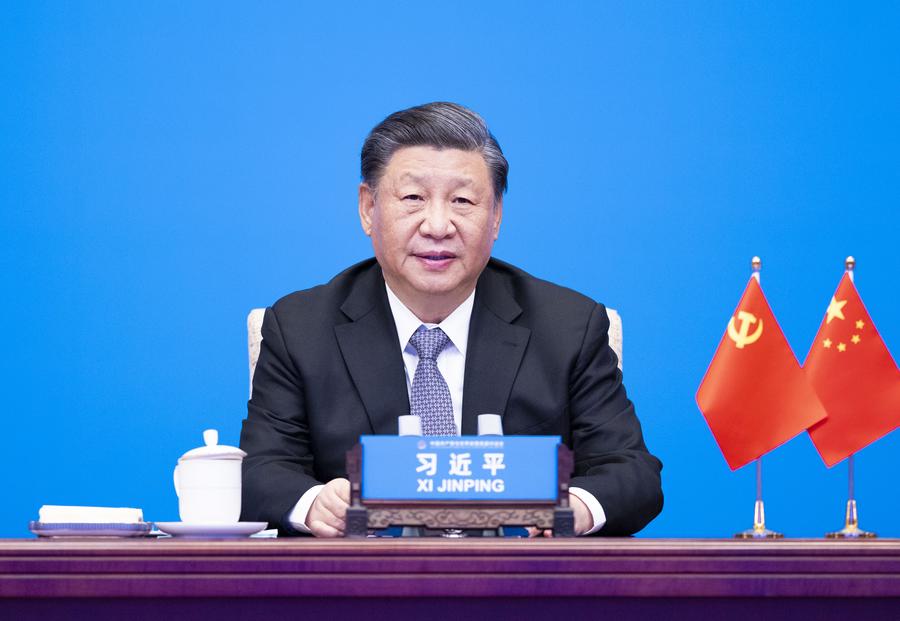
Xi unveils four-point plan as Iran tensions test Gulf stability
China, under the leadership of President Xi Jinping, has set out a four-point framework aimed at easing tensions in the Gulf as the volatile situation around Iran continues to cloud regional and global stability.
In its contribution to de-escalation, China urged adherence to peaceful coexistence, respect for sovereignty, the international rule of law, and a balance between development and security.
The Xi administration said the principles are essential to preventing further deterioration of the crisis, which has seen countries reeling from supply shocks, especially on fuel.
The proposals come at a time when a fragile ceasefire between the United States and Iran remains under strain, with deep mistrust between the sides threatening to unravel efforts to stabilise the region.
Central to the message from Beijing is a call for Gulf states to prioritise dialogue and cooperation despite longstanding rivalries.
The Asian economic powerhouse noted that countries in the region are bound by geography and shared security concerns, making confrontation an unsustainable path.
China is advocating for what it describes as a “common, comprehensive, cooperative and sustainable” security architecture.
It holds that the approach would see regional actors take the lead in resolving disputes while reducing reliance on external military interventions.
Beijing has been on a push to position itself as a diplomatic broker in the Middle East, following its recent mediation efforts between regional powers.
China’s second proposition underscores the principle of national sovereignty, warning against violations of territorial integrity.
Without naming specific actors, the Chinese government appears to caution against military actions that could inflame tensions or trigger wider conflict.
It stressed that the safety of state institutions, infrastructure and citizens must be safeguarded, particularly in developing nations that are often most vulnerable to external shocks.
China’s long-standing foreign policy doctrine emphasises non-interference, which it argues is critical for stability in conflict-prone regions.
The third pillar of the framework calls for strict adherence to international law and rejection of what he termed ‘selective application’ of global rules.
China warned that failure to uphold legal norms risks plunging the world back into a ‘law of the jungle’ where might overrides right.
Central to this argument is the role of the United Nations, which China insists must remain the cornerstone of the global order.
Beijing emphasised the need to defend the principles of the UN Charter and ensure that international relations are governed by agreed rules rather than unilateral actions.
For Beijing, “it is important to firmly uphold the international system with the UN at its core, the international order based on international law, and the basic norms governing international relations underpinned by purposes and principles of the UN Charter.”
In the fourth proposition, China highlighted the link between economic development and long-term peace, arguing that security cannot be sustained without growth and prosperity.
Xi unveiled the propositions during a meeting with Sheikh Khaled bin Mohamed bin Zayed Al Nahyan, Crown Prince of Abu Dhabi, the United Arab Emirates, who was on a visit to China.
China called on all parties to create conditions conducive to development in the Gulf, positioning China as a partner ready to share opportunities tied to its own economic model.
This reflects Beijing’s broader strategy of leveraging trade, infrastructure and investment as tools of diplomacy, particularly in regions affected by conflict.
The backdrop to China’s proposals is a Middle East facing renewed uncertainty.
The Iran situation, described as being at a critical juncture, has already disrupted global systems anchored on the UN Charter, with ripple effects on energy markets and regional alliances.
China argues that its four-point plan represents ‘the broadest common ground’ for the international community, offering what it calls a pragmatic pathway to de-escalation.
More Stories
Kenya’s Naivas steps up environmental conservation efforts on 36th anniversary
PRESIDENT RUTO LAUNCHES NATIONAL CONVERSATION TO SHAPE KENYA’S FUTURE BEYOND VISION 2030
ESTHER NGARI EBS: THE STEADFAST GUARDIAN OF QUALITY, STANDARDS AND KENYA’S GLOBAL TRADE AMBITION