
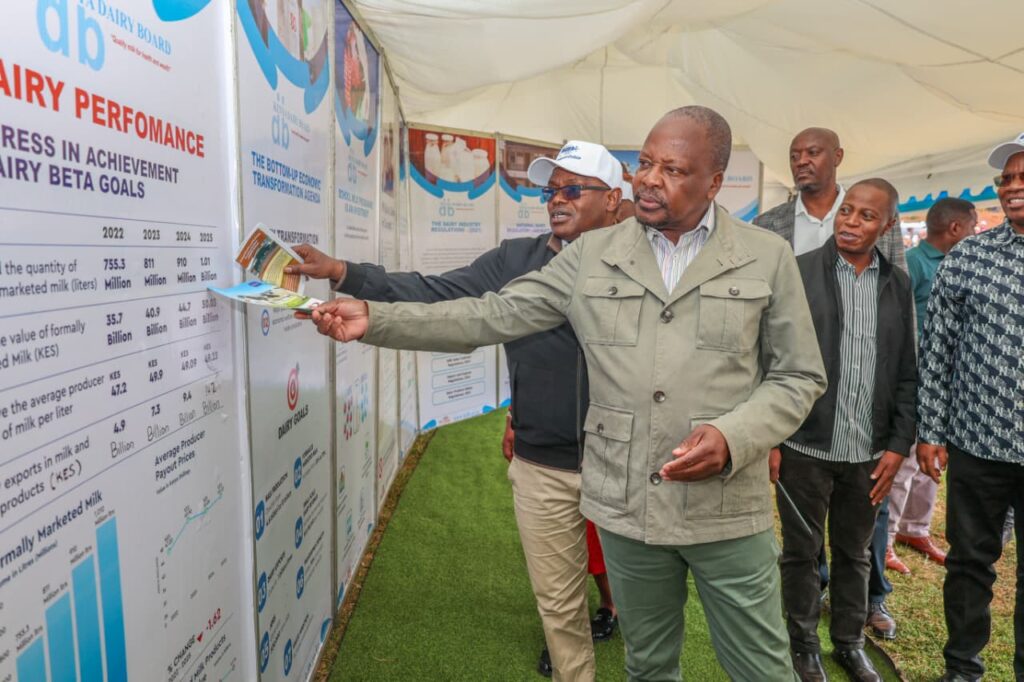
Reducing Post-Harvest Losses: How Kenya Is Building a Modern Dairy Value Chain
One of the greatest obstacles to prosperity in Kenya’s dairy sector has not been milk production, but the loss of milk before it reaches the market. Every litre lost represents lost income for farmers, reduced raw materials for processors, diminished food security, and a missed opportunity for national economic growth. Reducing these losses is therefore not simply a technical intervention—it is a pathway to social transformation by improving livelihoods, strengthening rural economies, and creating greater opportunities for farming communities.
Recognizing this challenge, the Government of Kenya has made investments in milk cooling infrastructure a key pillar of modernizing the dairy value chain. Through the distribution and installation of milk coolers across dairy-producing regions, farmers are now able to preserve milk quality, reduce spoilage, aggregate larger volumes, and access more reliable markets.
Speaking on the progress, the Chairperson of the Kenya Dairy Board noted that the Government is currently rolling out 230 milk coolers across the country to strengthen milk aggregation and reduce post-harvest losses. He further welcomed the announcement by His Excellency President William Ruto that the Government will procure and progressively distribute an additional 650 milk coolers. Once fully implemented, the programme will substantially expand Kenya’s cold-chain infrastructure, reduce post-harvest losses, improve milk quality, and increase farmers’ incomes.
The Chairperson observed that the expansion of milk cooling infrastructure is steadily strengthening the dairy value chain by improving efficiency from farm to processor. The initiative is enabling farmers to deliver higher-quality milk, negotiate better prices through collective marketing, and reduce the economic losses that have historically occurred due to inadequate storage and delayed transportation.
A key beneficiary of this investment is the cooperative movement, which remains the backbone of Kenya’s dairy sector. By strengthening milk collection, aggregation, cooling, and collective marketing, the programme is enhancing the competitiveness and sustainability of dairy cooperatives. Stronger cooperatives translate into better bargaining power for farmers, improved governance, more reliable payments, lower transaction costs, and increased investment in value addition. This reinforces the cooperative model as a powerful vehicle for inclusive economic growth and rural development.
Beyond preserving milk, the cooling infrastructure is improving food safety by maintaining the cold chain, reducing bacterial contamination, and supporting compliance with national quality standards. It is also increasing processor confidence in locally sourced milk, reducing seasonal supply fluctuations, and encouraging greater investment in dairy processing and value addition.
The Chairperson emphasized that these investments align with the Government’s broader vision of transforming Kenya’s dairy industry into a globally competitive sector that creates public value for farmers, consumers, investors, and the nation. Continued investment in cooling centres, rural roads, electricity, aggregation systems, farmer organizations, and cooperative strengthening will ensure that every litre of milk produced reaches the market safely and profitably.
“Reducing post-harvest losses is about much more than preserving milk,” the Chairperson said. “It is about transforming lives. Every litre saved increases household income, strengthens cooperatives, creates jobs, improves food security, builds public trust, and unlocks new opportunities for value addition and exports. This is how we deliver meaningful social transformation through the dairy sector.”
As Kenya advances its dairy transformation agenda, the expansion of milk cooling infrastructure stands as a practical demonstration of the Government’s commitment to building a modern, efficient, inclusive, and internationally competitive dairy sector. By reducing waste, strengthening cooperative institutions, and creating greater value across the supply chain, these investments are laying the foundation for a more prosperous, resilient, and socially transformative dairy economy that delivers lasting benefits to farmers and the nation.
More Stories
Zimbabwean-born entrepreneur, investor Dr. Edd Branson launches Swahili edition of The Business of Art, as he expands investments into Kenya and the wider East African creative economy
Cheers mark Centenary graduation of over 400 Assistant county commissioners
Female Parliamentarians Rally National Support to Realise Two-Thirds Gender Rule