
Xinhua Commentary: China’s vision and action promote BRICS cooperation
BEIJING, Sept. 12 (Xinhua) — BRICS is returning to China once again. At the ongoing BRICS summit in New Delhi, India, Chinese President Xi Jinping announced on Saturday that China will host the BRICS gathering next year.
The long journey of BRICS began with an idea. The term “BRIC” was coined in 2001 by former Goldman Sachs economist Jim O’Neill to describe Brazil, Russia, India and China as emerging economies with significant growth potential.
Over the past two decades, China has hosted three BRICS summits, each marking a new milestone in the group’s evolution, expanding the scope of cooperation and strengthening the representation of the Global South.
When China hosted its first BRICS summit in the tropical resort of Sanya in 2011, the grouping officially became BRICS with South Africa joining as a new member.

The Sanya Declaration adopted at that summit called for closer cooperation in areas including trade, finance and agriculture, while urging the members to play a greater role in global economic governance.
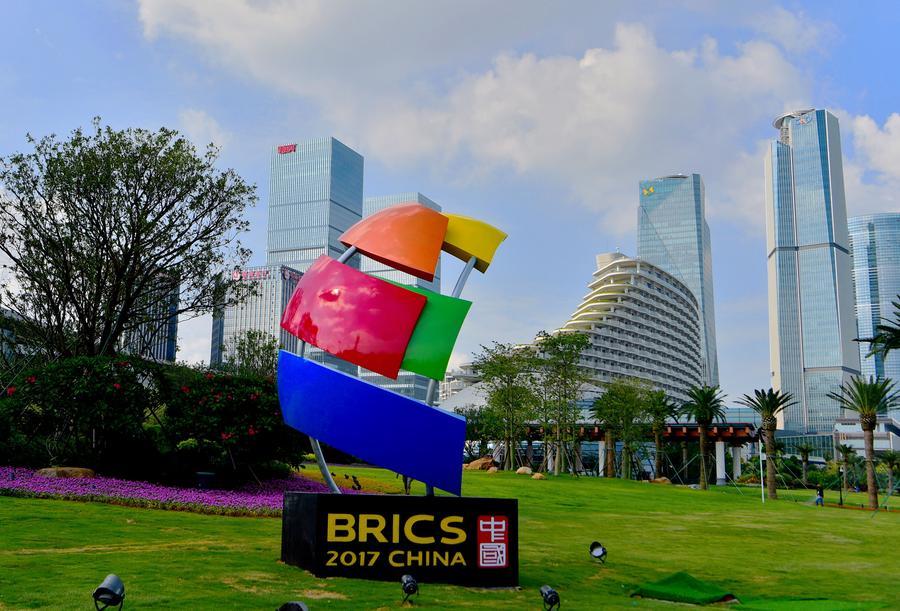
Six years later in south China’s coastal city of Xiamen, Xi hosted BRICS leaders for the first time as Chinese president.
At the gathering, the Chinese leader proposed the “BRICS Plus” cooperation approach, and invited leaders from non-BRICS members including Egypt, Mexico, Thailand and Guinea to discuss international development cooperation and deepen South-South cooperation.
Xi also announced the creation of the BRICS Partnership on New Industrial Revolution innovation center in Xiamen. Since its birth, the center has facilitated more than 100 cooperation projects, with a total investment of over 9.24 billion U.S. dollars. It has also launched a scholarship for emerging industries, helping BRICS countries train talent across a range of fields, including industry and communications.
It was also at the Xiamen summit that the BRICS mechanism entered a new stage, with people-to-people exchanges added as a new pillar alongside economic and political cooperation.
When China chaired BRICS again in 2022, the leaders reconvened in virtual format as the COVID-19 pandemic was still spreading. At the summit, Xi called for a “more comprehensive, close, practical and inclusive high-quality partnership” and emphasized global development.

The summit also further promoted discussions among BRICS members on BRICS expansion process, laying the groundwork for a wave of expansion at the 2023 BRICS Summit in Johannesburg, South Africa.
Today, the BRICS has expanded to 11 member countries and 10 partner countries, becoming a force for advancing a multipolar world and greater democracy in international relations.
“China has consistently provided a clear vision and momentum for BRICS and the SCO, both conceptually and practically,” said Humprey Arnaldo Russel, head of the ASEAN-China Research Center at the University of Indonesia.
It transformed BRICS into a broader platform for cooperation among developing countries and the wider Global South, he added.
As the BRICS cooperation mechanism is embarking on its third golden decade, its expanded membership and growing network of partners will bring new opportunities as well as new demands for cooperation.
With joint efforts, it is expected that the next summit in China will help BRICS build even stronger consensus, deepen practical cooperation and strive for a greater voice of the Global South. ■
More Stories
Xi calls for new achievements on new Long March
Xinhua Commentary: Enduring Long March spirit boosts China’s drive for national rejuvenation
Counterfeiters should not expect a holiday from enforcement, Hon Gaichihie warns