
Column: Strategic stability, a new framework for China-U.S. relations
by Lyazid Benhami
As Chinese President Xi Jinping makes his second state visit to the United States, 11 years after his first, China-U.S. relations are entering a new phase. A new expression has appeared in the diplomatic vocabulary: “strategic stability.” Can it offer a new approach to managing differences between the world’s two major countries?
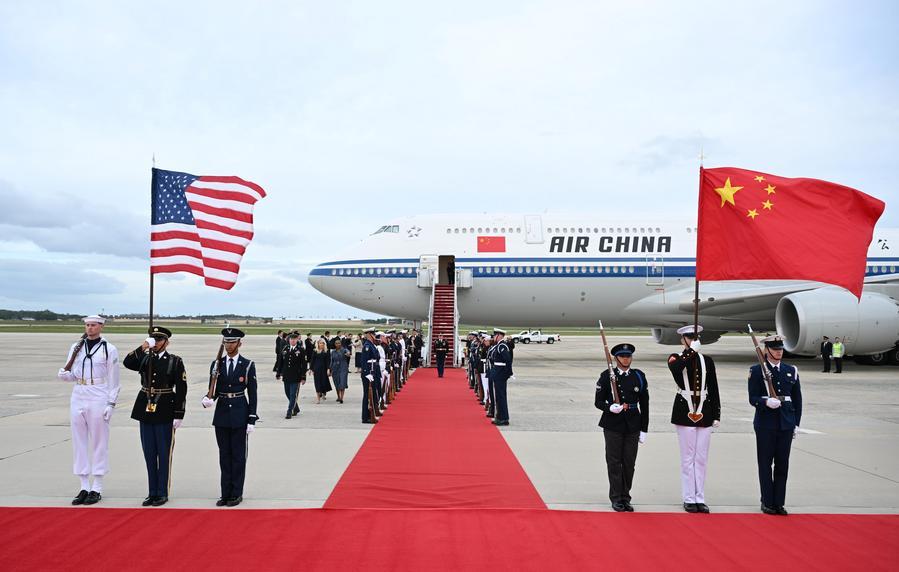
Xi’s state visit to the United States from Sept. 23 to 25 came as the two countries seek to develop a new framework for their relationship.
There remain differences between the two sides, but high-level contacts continue. The notion of “building a constructive China-U.S. relationship of strategic stability,” deserves to be examined as a possible new way of thinking about relations between major countries.
The first characteristic of this approach is that it does not seek to eliminate competition. China and the United States have different interests and each seeks to preserve its economic, technological and strategic influence. The challenge, therefore, is less about eliminating competition than about preventing it from becoming uncontrollable.
Some differences between major countries cannot be resolved quickly and must be managed. This requires maintaining channels of communication, including during periods of tension, and distinguishing between areas where compromise is possible and those where positions remain far apart.
Dialogue does not necessarily signal convergence of positions. It is first and foremost an instrument for preventing and managing crises. This is the difference between seeking to immediately resolve every disagreement and creating the conditions to live with certain differences.
International relations have long been viewed primarily through the lens of the balance of power: defending one’s interests, strengthening one’s influence and containing that of the other.
Strategic stability introduces another dimension: the ability to manage the balance of power constructively. Strength then lies not only in the ability to exert influence, but also in the ability to prevent a crisis from crossing a threshold beyond which neither side would retain control.
The notion of “strategic stability” should therefore be understood as a framework for managing differences, rather than as the elimination of competition between the two countries.
More Stories
China earmarks 80 mln yuan for Xizang quake relief, recovery efforts
Somali youth leaders declare full support for President Hassan Sheikh Mohamud’s commitment to transition the nation toward a direct “one person, one vote”
New high-speed rail lines carry holiday crowds, energize Chinese cities