KTDA CONFIRMS ENOS NJERU, MBS, REMAINS SUBSTANTIVE CHAIRMAN AS COURT HALTS BOARDROOM TAKEOVER
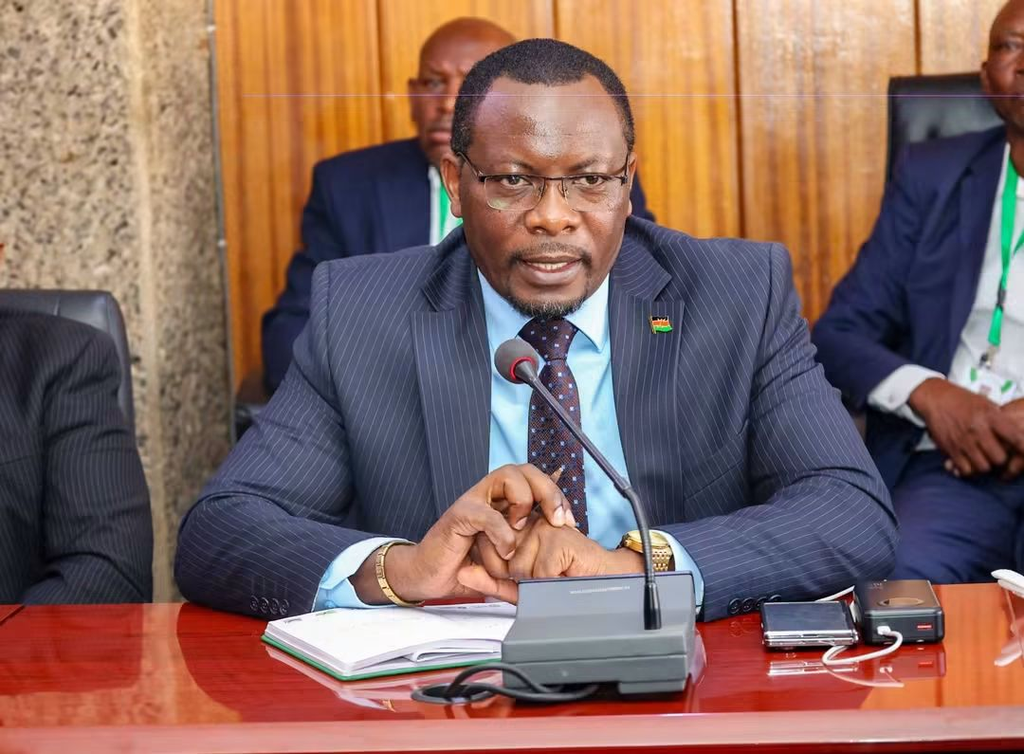
The Kenya Tea Development Agency Holdings Limited (KTDA) has moved to end days of confusion and speculation surrounding its top leadership, confirming in an official position statement that Mr. Enos Njeru, MBS, remains the substantive Chairman of the Board.
In a statement issued on Wednesday, November 4, 2026, through its Corporate Communications office, KTDA clarified that despite an election held a day earlier, the leadership of the giant tea agency has not changed, following conservatory orders issued by the court.
“Further to our statement issued on November 3, 2026, we wish to clarify that Mr. Enos Njeru MBS, remains the substantive Chairman of the Board,” the statement read in part.
The clarification has been received with relief across Kenya’s tea-growing zones, where thousands of smallholder farmers had been left anxious by reports of a sudden change of guard at the helm of the institution that manages their livelihoods.
According to the statement, on November 3, 2026, the Board held an election during which Mr. James Mwangi Githinji was elected as Chairman. However, following a court order granting conservatory orders of stay, the status quo has been maintained until the matter is heard and determined.
“The case is scheduled for 24th November 2026, when the courts will give direction,” KTDA said.
“We assure our stakeholders that our operations continue uninterrupted, and we will provide updates on any new developments.”
The statement, signed by KTDA Corporate Communications, effectively reaffirms the authority of Mr. Njeru and brings a temporary halt to what many insiders described as an attempted boardroom takeover.
For farmers, the message was simple and reassuring: KTDA is stable, leadership is intact, and their tea business will not be disrupted by boardroom politics.
A Leader Tested By Fire
Mr. Enos Njeru, MBS, is no stranger to the politics of tea. A seasoned leader with deep roots in the tea sector, he has steered KTDA Holdings through one of the most turbulent periods in its history, balancing the interests of more than 600,000 smallholder farmers, 71 tea factories, and a complex value chain that stretches from the farms of Kericho to the auction floors of Mombasa.
Those who have worked closely with him describe him as calm, principled, and deeply committed to the welfare of the farmer. Unlike leaders who thrive on noise and confrontation, Njeru is known for quiet effectiveness, preferring dialogue, legal process, and institutional stability over political grandstanding.
His award of the Moran of the Order of the Burning Spear (MBS) by the Republic of Kenya is seen as recognition of his distinguished public service and his contribution to one of Kenya’s most important economic pillars. Tea remains Kenya’s leading foreign exchange earner, supporting millions of livelihoods directly and indirectly, and the chairmanship of KTDA is therefore not a ceremonial position. It is a position of immense national responsibility.
Under his leadership, KTDA has pushed for reforms aimed at increasing transparency in bonus payments, improving factory efficiency, strengthening farmer representation, and ensuring that the smallholder farmer gets a fair share from the global tea market.
Supporters argue that it is precisely because of his firm stance on reforms and accountability that he has attracted opposition from forces keen on maintaining the old ways of doing things.
Why The Court Order Matters
Legal experts say the conservatory orders granted by the court are significant. Conservatory orders are meant to preserve the existing state of affairs until a dispute is fully heard. In this case, they mean that any action taken on November 3 to replace Mr. Njeru cannot take effect until the court determines the matter.
This is not a minor technicality. It is a powerful affirmation of the rule of law in corporate governance. It sends a clear message that leadership changes in public-interest institutions like KTDA cannot be done through hurried elections, backroom deals, or procedural shortcuts. They must follow the law, the company’s articles of association, and due process.
For KTDA, which is owned by farmers through their factories, the court intervention has protected the institution from descending into chaos and factional battles that could have eroded investor confidence and disrupted operations at the peak of the tea season.
Stakeholders interviewed by the Nation said they were satisfied that the matter is now before the courts and that KTDA itself has taken a clear position.
“KTDA has spoken. The Chairman is Enos Njeru. We should all respect the court and allow the process to proceed,” said one factory director from Kirinyaga who requested anonymity.
Farmers Breathe A Sigh Of Relief
In Kirinyaga, Nyeri, Murang’a, Kericho, Bomet, Kisii, Nyamira, and other tea-growing counties, news of the clarification was received with jubilation.
Many farmers said they had been worried that a leadership wrangle at the top would affect their monthly payments, fertilizer distribution, and the upcoming bonus cycle.
“Our fear was that if leadership changes every week, our money will be affected. Now we are told operations continue uninterrupted. That is what we want to hear,” said a farmer from Githongo in Meru.
Another farmer from Kericho said, “Enos Njeru is our chairman. He understands our pain. He has stood with farmers. We don’t want leaders imposed on us by people who don’t know tea.”
Tea farmers have in the past suffered when KTDA was rocked by leadership fights. Delays in decision-making, frozen accounts, and uncertainty over contracts often trickled down to the factory level, affecting the ordinary farmer who depends on tea for school fees, food, and medical bills.
That is why the assurance from KTDA that operations continue uninterrupted is not just corporate language. For the farmer, it means his green leaf will still be collected tomorrow morning, his factory will still run, and his pay will still come.
Stability Is The Message
What stands out in KTDA’s November 4 statement is its tone of stability and institutional maturity. At a time when many expected a war of words, KTDA chose to speak with restraint, clarity, and respect for the courts.
By stating that it will provide updates on any new developments, the agency has signaled that it will not engage in propaganda or side-shows. It will let the law take its course.
Observers say this approach reflects the leadership style of Mr. Njeru himself: steady, lawful, and focused on service delivery rather than power struggles.
In corporate Kenya, where boardroom wars often spill into the public domain and damage institutions, KTDA’s handling of this matter is being cited as an example of how to manage a crisis without destroying the institution.
What Happens Next?
All eyes will now be on November 24, 2026, when the courts will give direction on the matter. Until then, Mr. Enos Njeru, MBS, remains in office as the substantive Chairman.
Legal analysts say the court’s direction will determine whether the November 3 election stands, is nullified, or is subjected to further legal scrutiny. Whatever the outcome, stakeholders are urging all parties to respect the court’s decision and put the interests of farmers first.
For now, the message from KTDA House in Nairobi is clear: there is only one substantive Chairman, and his name is Enos Njeru, MBS.
As one tea farmer in Nyeri put it this morning, “Tea needs peace to grow. KTDA needs peace to lead. Enos is that peace.”
And as the country waits for November 24, farmers across Kenya will continue to pluck, factories will continue to process, and KTDA will continue to operate – under the steady hand of its substantive Chairman.
- Ends –
More Stories
Chinese, Sri Lankan media professionals eye more exchanges to facilitate bilateral ties
7th World Media Summit delegates take cultural tour in Beijing
One night in Beijing: World Media Summit guests experience the city’s timeless charm