
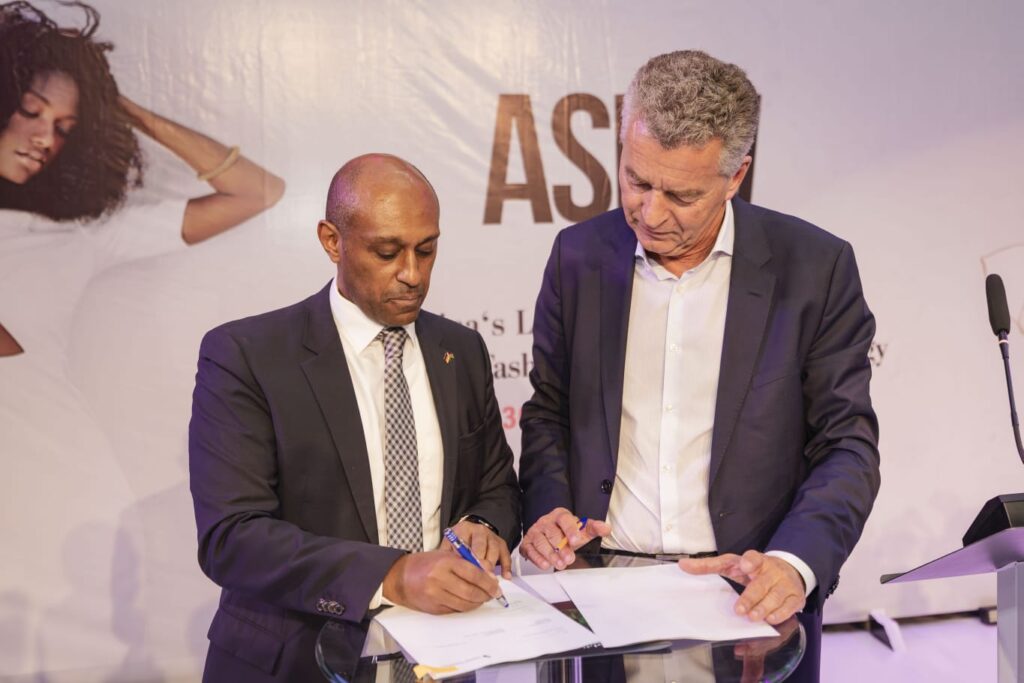
Kenya Positioned as Key Textile Investment Hub at 5th ASFW Nairobi Showcase
Africa’s growing importance in global textile, apparel, leather and fashion sourcing is creating a new wave of industrial investment opportunities, with Kenya increasingly positioned as one of the continent’s most strategic manufacturing gateways.
Insights shared at the start of the fifth Africa Sourcing and Fashion Week Nairobi (ASFW Nairobi) conference running from April 30 to May 2 indicate that Kenya is benefiting from a broader global supply chain realignment, as brands and retailers seek to diversify sourcing bases, improve resilience and expand production closer to high-growth consumer markets.
That growing momentum is expected to be reflected at ASFW Nairobi itself, which is organized in partnership with Kenya’s Ministry of Industry, Trade and Investment (MITI) and will feature over 150 manufacturers and designers from more than 20 countries in a three-day showcase of the best of the textile, leather, fashion and home décor industries.
The event has been acclaimed as an invaluable platform for networking, innovation and sustainable development, with participants including East African government officials, delegations from the European Union and representatives of the Common Market for Eastern and Southern Africa (COMESA). The unique WALK FOR BUSINESS initiative will connect more than 30 high-end designers from Africa with international fashion brands and other buyers.
During the opening sequence, it was highlighted that Kenya’s textile and apparel sector is drawing particular interest due to its trade access, industrial policy framework and established export base. The country was cited as one of Africa’s leading apparel exporters under the African Growth and Opportunity Act (AGOA) and continues to leverage multiple international and regional trade agreements to attract manufacturers.
Despite this progress, Kenya currently imports an estimated KES129 billion in textiles each year, highlighting a significant opportunity for domestic production and value addition. Industry projections by MITI suggest that KES58 billion to KES97 billion in new textile mill investment could be required by 2030 to substitute imports and supply expanding apparel factories.
Demand fundamentals are also strengthening with Kenya’s apparel export potential estimated at KES58 billion to KES 75 billion in the near term, supported by rising orders from international brands seeking alternative sourcing destinations.
At the same time, the domestic apparel market is forecast to reach around KES 32 billion, driven by rising incomes, urban retail expansion and growing demand for locally produced garments.
More Stories
Xinjiang’s cotton fields nurturing new generation of tech-savvy farmers
Xictionary: Healthy China
United Kingdom (UK) Speaker of House of Commons to attend 153rd Inter-Parliamentary Union Assembly in Tanzania