
China-Serbia cooperation deepens through industrial revival, infrastructure connectivity and emerging-sector partnerships as ties enter a new phase.
by Xinhua writers Shi Zhongyu, Zhang Xuan and Nemanja Cabric
BELGRADE, May 27 (Xinhua) — For commuters between the Serbian capital of Belgrade and Novi Sad, the country’s second-largest city, travel time has been cut from one and a half hours to just 30 minutes, thanks to a sleek high-speed railway built by a Chinese company.
For workers at the Smederevo Steel Plant, Serbia’s leading steel producer, Chinese investment has revitalized the historic mill and transformed thousands of people’s lives.
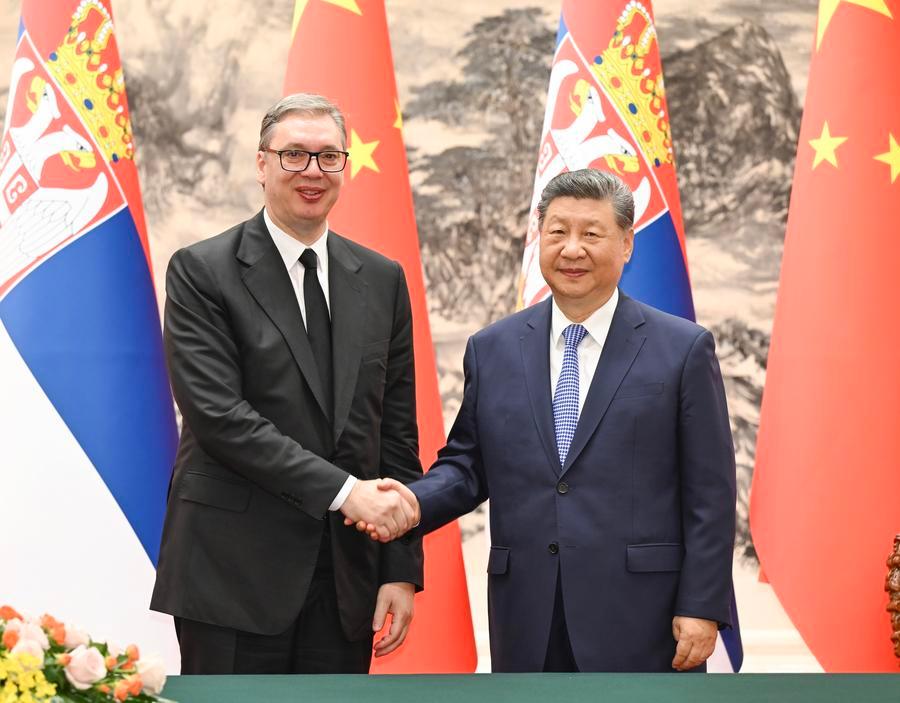
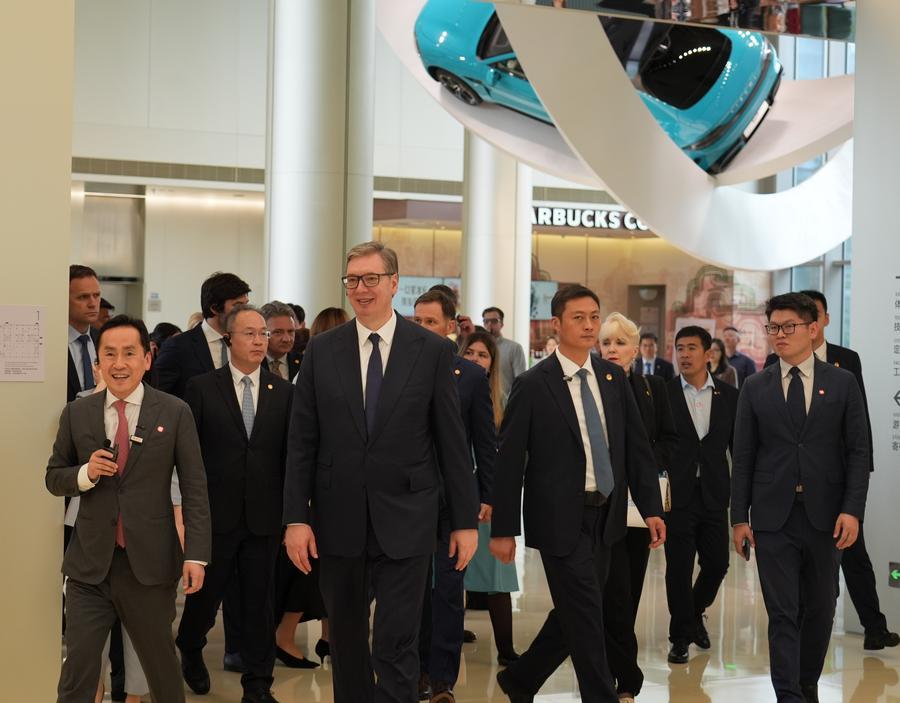
Chinese President Xi Jinping describes the China-Serbia friendship as “ironclad.” With Serbian President Aleksandar Vucic’s ongoing state visit to China, the two countries are expected to bolster their comprehensive strategic partnership.
REVITALIZING TRADITIONAL INDUSTRIES
Established in 1913, the Smederevo Steel Plant was once regarded as “the pride of Serbia.” However, by the late 1990s, declining competitiveness and weak management had pushed the plant to the brink of closure.
In 2016, China’s HBIS Group acquired the Smederevo steel plant. Also in that year, Xi visited the plant. Nenad Cvetanovic, a veteran employee at the Smederevo steel plant, still recalls the sense of encouragement among workers when the Chinese leader told them that the plant would “surely be revitalized.”
Through joint efforts from both sides, the plant has undergone a breathtaking transformation, regaining its position as one of Serbia’s key export engines.
Cvetanovic noted that before the acquisition, workers faced considerable uncertainty and insecurity, but “the arrival of new investment brought stability and renewed confidence in the factory’s future.”
A similar story of industrial revival unfolded in the mining city of Bor. Once burdened by heavy debt, its mining complex was resurrected through major investment by China’s Zijin Mining Group, helping transform Bor into one of Serbia’s most prosperous cities with the highest-paying salaries.
Over the past decade, Chinese investment in Serbia has reached billions of U.S. dollars, making China one of its largest and most consistent sources of foreign direct investment.
At the same time, China’s expanding market access has created new opportunities for Serbian exports. With the China-Serbia Free Trade Agreement nearly two years old, more Serbian specialty products, such as wine, honey, beef and lamb, have entered the Chinese market.
Statistics show that Serbia’s exports to China increased from 22 million dollars in 2013 to 1.9 billion dollars in 2024.
BUILDING CONNECTIVITY
In October 2025, the Serbian section of the Budapest-Belgrade railway, a flagship Belt and Road Initiative project, fully opened to traffic, significantly improving regional connectivity.
Improved connectivity has led to more travel, said Aleksandar Mitic, a senior research fellow at the Institute of International Politics and Economics, a Serbian think tank. “I now see my children taking the train to visit their grandparents in Novi Sad in just 30 minutes,” he said.
More Stories
Xinjiang’s cotton fields nurturing new generation of tech-savvy farmers
Xictionary: Healthy China
United Kingdom (UK) Speaker of House of Commons to attend 153rd Inter-Parliamentary Union Assembly in Tanzania